


Can movement help counteract depression?
DepressionDepression is a disorder characterized by persistent sadness... More is one of the most widespread mental healthWhat is meant by mental health? According to the World Healt... More conditions globally. It typically appears as an emotional phenomenon characterized by strong negative beliefs. Research shows that the most effective pathways to treat it go through the instinctive-motor dimension. Important links thus emerge between different functions and the need for a global education for global healthWhat is the definition of health proposed by the WHO in 1948... More.
Depression today in the world
According to the World Health Organization (WHO), more than 264 million people of all ages suffer from depression—understood as a clinical condition very different from more common states of emotional distress—worldwide. In addition, research shows that depression is correlated to some extent with cases of suicide**Suicide can be defined as “the deliberate act of ending ... More. The WHO estimates that approximately 727,000 people die by suicide every year, with depression often identified as a significant contributing factor.
Depression in Italy
According to data from the Istituto Superiore di Sanità (ISS), it is estimated that about 3% of the Italian population suffers from major depression. Statistics show that depression is more common among women than men, with a prevalence that reaches nearly double among women. The situation is even more delicate among young people: among adolescents aged 15 to 19, 4% suffer from depression.
It is also necessary to take into account the fact that the pandemic has had a significant impact on the mental health of Italians. A 2020 study found an increase in cases of depression, with about 24.7% of Italians reporting depressive symptoms during the lockdown.
Depression and the Triune Brain
From the perspective of global health that considers all parts of our being, it may be relevant to consider depression within the framework of the triune brain model proposed by Paul D. MacLean. This model hypothesizes a division of the human brain into three parts corresponding to different stages of evolution:
- the reptilian brain (instinctive)
- the limbic brain (emotional)
- the neocortex (rational).
Unexpected relationships between emotional, physical, and mental phenomena
 Ordinarily, when we encounter the phenomenon of depression, we are struck by the beliefs that accompany it, and reasoning may seem useful. Research instead indicates that movement can be a far more effective way to change the state of a person in distress. For example, aerobic exercise can reduce activity in the limbic brain, decreasing anxietyAnxiety is an emotional response characterized by feelings o... More and improving mood, while activities that require coordination and planning, such as dance or team sports, can activate the neocortex, improving cognitive function and emotional regulation.
Movement and depression
Recent studies suggest that physical movement can play a key role in mitigating the symptoms of depression through mechanisms involving the vagus nerve. Analyzing how movement affects these neural systems offers promising perspectives for more effective and integrated treatments for depression.
Il periodico semestrale sugli stili di vita e le risorse interiori, le emozioni, le relazioni e le intelligenze, per una salute globale
"*" indicates required fields
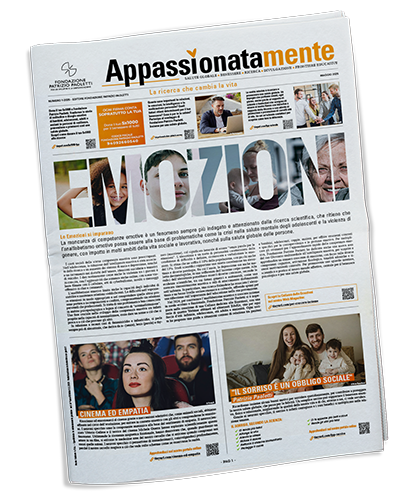
LEGGI APPASSIONATAMENTE
7 mechanisms to mitigate the symptoms of depression through movement
Here are some of the main mechanisms for mitigating the symptoms of depression highlighted by studies:
- Increase in neurotransmitters: Physical exercise stimulates the release of key neurotransmitters such as endorphinsEndorphins are a group of endogenous peptides, meaning they ... More, serotoninSerotonin, also known as 5-hydroxytryptamine (5-HT), is a ne... More, and dopamineA neurotransmitter found in the brain and central nervous sy... More in the brain. These are often called “happinessHappiness represents an emotional state characterized by pos... More hormones” because they help improve mood and reduce pain. Serotonin, in particular, is often the target of many antidepressants, so increasing its production through physical activity can have effects similar to those of antidepressant medications.
- Reduction of inflammation: Inflammation has been linked to depression, with studies showing higher levels of inflammatory markers in people with depression.
- Improvement of neuroplasticity: Physical movement promotes neuroplasticity, that is, the brain’s ability to change and adapt in response to new experiences.
- Improvement of sleep: Depression is often associated with sleep disorders, and physical exercise can help improve sleep quality and duration.
- Increase in self-esteemThe term self-esteem literally refers to the evaluation of o... More and reduction of anxiety: Regular participation in physical activity can improve self-perception and self-esteem, reduce anxiety, and promote a general sense of well-being.
- Cognitive distraction: Physical exercise can act as a distraction, allowing people to find temporary relief from negative thoughts or vicious cycles of thinking that are common in depression.
- Promotion of a sense of control and achievement: Setting and achieving goals related to physical activity can give people a sense of control and achievement. This can be particularly powerful for those suffering from depression, who often feel helpless in the face of their condition.
4 key aspects of the connection between movement, emotions, and the vagus nerve
Further connections between the instinctive-motor dimension and the emotional dimension emerge when considering polyvagal theory, developed by Dr. Stephen Porges. Here are some key aspects regarding the connections between the vagus nerve and movement according to polyvagal theory:
Sense of safety and social well-being
According to polyvagal theory, the vagus nerve regulates the autonomic nervous system through two distinct vagal circuits: the ventral vagus, which promotes states of calm and connection, and the dorsal vagus, which can induce states of disconnection or immobilization in response to threats. Physical movement, particularly rhythmic and social movement such as dance or team sports, can activate the ventral vagus, facilitating a sense of safety and promoting social and emotional well-being.
Emotional regulation and stressWhat is stress? From a clinical perspective, stress is a phy... More
Regular movement influences the regulation of the autonomic nervous system by increasing vagal tone, that is, the ability of the vagus nerve to rapidly regulate heart rate in response to stress. High vagal tone is associated with greater stress resilienceWhat is meant by resilience? According to the American Psych... More and faster recovery after exposure to stressful situations.
Breathing and Movement
Breathing plays a crucial role in polyvagal theory, as the vagus nerve is directly involved in the modulation of respiration. Exercises that integrate movement and conscious breathing, such as yoga or tai chi, can particularly enhance the effectiveness of the ventral vagus in promoting a state of calm and emotional regulation.
Improvement of body self-perception
Mindful movement can help individuals become more aware of their body and internal sensations, a process known as interoception. Improving interoception through practices such as yoga, meditationThere are many ways to define meditation, but perhaps the si... More, or simply mindful physical exercise can strengthen the mind–body connection, facilitated by the vagus nerve, and improve overall emotional regulation.
Fondazione Patrizio Paoletti’s Research on Movement
Fondazione Patrizio Paoletti has been committed for over twenty years to research and the pedagogical application of neuroscienceThe human brain is one of the most complex and fascinating s... More to promote global health. Promoting global education as a determinant of health means considering all aspects of our being. For this reason, RINED, the Foundation’s research institute, has long been engaged in research on the relationship between mindful movement and cognition. The institute has developed interdisciplinary research on a mindful movement technique called Quadrato Motor Training, conceived by Patrizio Paoletti. Research has shown how it is possible to develop awareness, cognitive abilities, and emotional well-being through movement.
Brain functioning, Functioning and mangement of emotions, Hardship, News from our research, Prevenire la depressione, Prevenzione e benessere mentale, Stress
