

Instructional design is a key process in the field of education, playing a crucial role in shaping student learningThe term learning—with the synonyms to learn, assimilate, ... More. In this entry, we explore what is meant by instructional design, why it is important, who is responsible for it, the main phases involved, the differences between planning and instructional design, as well as the role of digital tools in this context.
What do we mean by ‘instructional design’?
Instructional design is the process of planning and organizing the activities and resources necessary to guide student learning. In other words, it involves creating a structured educational environment that supports the achievement of established learning objectives. This process requires a clear identification of learning goals, the selection of appropriate teaching strategies, and the choice of necessary teaching materials. Instructional design focuses on the learning experience, aiming to make it effective, engaging, and meaningful for students. It is an essential tool for schools to fully express their role in primary prevention and education for global health.
Why is instructional design important?
Instructional design is fundamental in education for several reasons. First, it allows for clear and measurable objectives, which are essential to evaluate teaching effectiveness. Without careful design, it is difficult to determine whether students have actually acquired the desired skills. Second, instructional design enables adaptation of the learning process to students’ needs, considering their abilities, learning styles, and potential challenges, which improves engagement and motivationMotivation: a scientific perspective Motivation is a fundame... More. Finally, a well-structured instructional design ensures consistency in teaching, allowing educators to plan lessons systematically, so that students receive comprehensive instruction.
Who is responsible for instructional design?
Instructional design is primarily the responsibility of teachers, but it can also involve other educational professionals such as pedagogists, educational psychologists, and learning designers. Teachers are often the main responsible parties for designing their lessons and courses. However, the involvement of experts in pedagogyTo understand what pedagogy is, let’s provide a definition... More and instructional design can lead to more effective and efficient design. These professionals bring specific expertise in selecting teaching materials, adapting lessons to students’ needs, and using advanced digital tools.
What are the main phases of instructional design?
Instructional design follows a structured process with several key phases:
- Needs analysis. In this initial phase, learning objectives are identified, and student needs are assessed. This step provides a solid foundation for the rest of the process.
- Planning. Here, teaching strategies are established, teaching materials are selected, and the structure of lessons or the course is defined. This phase requires detailed planning, considering available time and resources.
- Material development. At this stage, the necessary teaching materials are created or acquired, such as texts, videos, exercises, electronic resources, etc. These materials must align with the learning objectives and chosen teaching strategies.
- Implementation. During this phase, teachers put the plan into practice. Lessons are conducted, and courses are delivered, ensuring adherence to the instructional design.
- Evaluation and revision. After conducting lessons or courses, results are assessed against learning objectives. If necessary, adjustments are made to improve teaching effectiveness.
- Reflection and continuous improvement. This phase is a recurring cycle. Teachers must reflect on their experiences and student feedback to continuously improve instructional design.
What are the differences between planning and instructional design?
Planning and instructional design are closely related but distinct concepts in education. Planning focuses mainly on the temporal and sequential structure of teaching activities, including lesson scheduling, timing, evaluation methods, and resource management. Planning answers questions like “What do I teach?” and “When do I teach it?”
Instructional design goes beyond simply organizing lessons. It focuses on clear learning objectives, teaching strategies, selection of teaching materials, and overall pedagogical approach, which includes talentIn ancient Greece, talent was a unit of weight used to measu... More development, creativity training, and physical activity, within a framework that values the fundamental rights of children and adolescents. Instructional design thus answers broader questions such as “Why am I teaching this?” and “How can I teach it effectively?”
What is the role of digital tools in instructional design?
In recent decades, the advent of technology has opened new possibilities in instructional design. Digital tools play a crucial role in optimizing lesson organization and enhancing student learning experiences.
Key functions of digital tools in instructional design include:
- Resource management: Digital tools enable teachers to manage educational resources more efficiently. Online classroom management platforms allow teachers to share materials, assign tasks, and communicate with students in a more organized and rapid manner.
- Personalized learning: Digital tools allow learning to be tailored to students’ needs. Adaptive learning software can adjust activity difficulty based on individual skills, enabling students to progress at their own pace.
- Access to online resources: The internet provides a wide range of educational resources, including videos, simulations, documents, and more. Digital devices allow teachers to access and integrate these resources into lesson design, enriching student learning experiences.
- Assessment and feedback: Digital tools simplify assessment and feedback. Teachers can use online platforms to create quizzes, tests, and evaluation activities, which can be administered automatically, providing faster and more accurate feedback to students.
- Communication and collaboration: Digital tools facilitate communication between teachers and students and collaboration among students. Chats, forums, and online collaborative platforms allow discussion, problem-solving, and teamwork even remotely.
- Progress monitoring: Tracking software allows teachers to monitor student progress over time. These tools provide data to identify students needing extra support and adjust lesson planning accordingly.
- Documentation simplification: Digitalization simplifies recording and archiving teaching activity data, useful for tracking progress, evaluations, and attendance.
- Hybrid and remote learning: Digital tools have become essential for distance and hybrid learning. The COVID-19 pandemic highlighted the importance of such tools for ensuring continuity of education when students cannot be physically present.
While digital tools offer many advantages in instructional design, teachers must be properly trained in their use and maintain a balance between technology use and human interaction to ensure quality, complete, and meaningful learning.
What do we mean by Slow Learning?
Slow learning is a pedagogical approach that emphasizes gradual, reflective, and deep learning rather than accelerated or superficial methods. This approach prioritizes quality and depth of understanding over the speed of acquiring knowledge.
In slow learning, instructional design is structured with pathways that include time for in-depth study, discussion, and personal elaboration of content. Key elements include defining gradual learning objectives, providing teaching materials stratified by complexity levels, integrating reflective pauses and metacognitive moments, and planning continuous formative assessments.
Slow learning requires flexible instructional design, allowing space for review, consolidation, and deeper exploration, adapting to individual student rhythms. Particular attention is given to creating non-competitive learning environments where errors are considered part of the learning process, and interdisciplinary connections and active knowledge construction are valued.
Main characteristics of slow learning:
- Extended timeframes with personalized and prolonged learning times, respecting each individual’s natural rhythm.
- Reflective approach encouraging metacognition and deep processing of content through continuous reflection.
- Consolidation emphasizing the strengthening of neural connections through mindful repetition and deliberate practice.
- Personalization of instructional design, adapting learning to the individual learner’s characteristics.
Benefits of slow learning:
- A deeper and longer-lasting understanding of content
- The development of meaningful connections between different concepts
- A reduction of stressFrom a clinical point of view, stress is a physiological and... More associated with learning
- Greater autonomy in the learning process
- The development of metacognitive skills
The biannual magazine on lifestyles and inner resources, emotions, relationships, and intelligences, for overall well-being
"*" indicates required fields
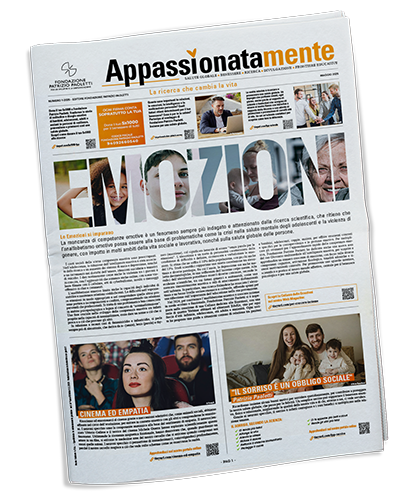
READ WITH PASSION
Be part of the change. Sharing content responsibly is a gesture that stands for sustainability.
Let’s train emotional intelligenceThe first definition of Emotional Intelligence as such was p... More: what emotion does this article evoke in you?

You might be interested in


Search by category


