Hikikomori: Overcoming Social Withdrawal and Rediscovering Yourself
Towards Reconnection and Renewed Well-Being
Who are the hikikomori?
Hikikomori are individuals, predominantly young, who choose to withdraw from social life for long periods, often confining themselves to their rooms for months or years, avoiding contact not only with friends and acquaintances but also with family members. This term, of Japanese origin, literally means “to stay aside” or “to isolate oneself.” Initially observed in Japan, in recent years it has spread worldwide, including Italy. Hikikomori often show disinterest in school or work, preferring to remain confined in their room, engaged in solitary activities. They browse the internet, play video games, watch movies or TV series. Some dedicate themselves to reading or writing, but always in a context of total isolation. In addition to social withdrawal, they may experience sleep difficulties due to irregular sleep-wake cycles.Another common aspect is a strong dependency on technology, especially the internet, which often represents the only window to the world. Through screens, they maintain minimal contact with reality without having to leave the virtual refuge they have created. The reasons why these individuals isolate themselves are multiple and complex. Often, bullyingAlthough there is no universally agreed-upon definition of b... More and school pressures play a significant role. Fear of judgment and failure, combined with identity crises and self-esteemThe term self-esteem literally refers to the evaluation of o... More issues, drives many young people to isolate themselves. The inability to face social and family expectations, together with experiences of rejection and humiliation, further fuels this extreme choice of social withdrawal.
An epidemic of loneliness
The contemporary world suffers from a sort of general epidemic of loneliness. Worldwide, the new STADA Health Report 2024 shows that 52% of respondents suffer from it. According to the data, 46% believe that the solution would be a renewed balance between professional commitments and private life, demonstrating the role of social pressures in the problem. According to the report, one factor related to loneliness appears to be social media use: those who spend more time online tend to feel lonelier compared to those who limit their usage. Yet, awareness of the importance of our daily habits remains low, as only 20% of European youths consider excessive use of social media and video games a risk factor for loneliness. Loneliness strongly impacts global healthIn the vast and multifaceted landscape of global health, the... More, correlating with anxietyAnxiety is an emotional response characterized by feelings o... More, depressionDepression is a disorder characterized by persistent sadness... More, and also with higher risks of cardiovascular diseases, diabetes, and dementiaDementia is a medical condition characterized by the progres... More.
Download the EduKit to mindfully manage your relationship with young people
"*" indicates required fields
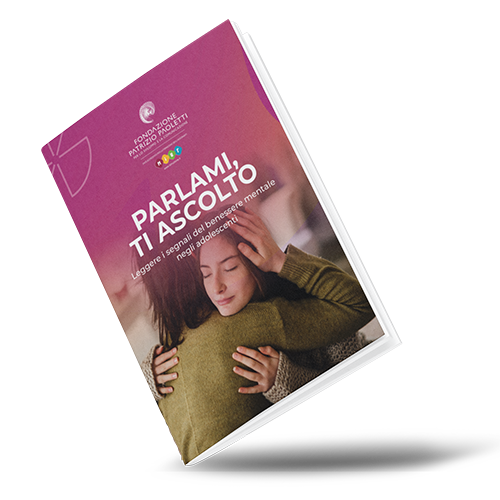
TALK TO ME, I’M LISTENING
The three dimensions of loneliness
Loneliness, for hikikomori, manifests in a complex and layered way. It is essential to understand the three main dimensions of loneliness – emotional, social, and existential – to gain a full picture of their isolation and its roots. These three dimensions are interconnected and mutually reinforcing.- Emotional loneliness occurs when a person feels the lack of deep and meaningful affective relationships. Hikikomori often feel emotionally isolated, even when physically surrounded by others. This may arise from various factors, including experiences of rejection, lack of emotional support from parents, or loss of important friendships. The fear of being judged, hurt, or misunderstood also pushes them to avoid any type of contact.
- Social loneliness, instead, concerns the lack of regular interactions with friends and acquaintances. Hikikomori withdraw from school and work activities, gradually losing any social connectionConnection: the human need that precedes all technology Conn... More. This isolation is often self-imposed but can be reinforced by external factors such as exclusion and bullying.
- Existential loneliness translates into a profound disconnection from the surrounding reality, due to the absence of regular interactions. Existential loneliness impacts life purpose and meaning and is characterized by a feeling of emptiness and futility. Hikikomori often experience identity crises, unable to find a sense of belonging.
Hikikomori feel alienated from society and unable to identify with its values and expectations. The lack of a defined role or a meaningful life project leads to deep dissatisfaction and a sense of despair. This makes it extremely difficult for them to motivate themselves to leave their isolation.
How to address the hikikomori phenomenon?
Addressing hikikomori loneliness requires a holistic approach that considers all three dimensions: social, emotional, and existential. Individual and group therapies are essential to rebuild trust in interpersonal relationships and process the causes of their isolation. At the same time, creating opportunities for gradual and positive social interactions, such as community activities, can help overcome social isolationSocial isolation is a psychological and social phenomenon th... More. Moreover, helping hikikomori find a sense of purpose through education, vocational training, and creative activities can play a crucial role in reducing existential loneliness. Family support is also fundamental. Families must be educated about the phenomenon and provide a safe and understanding environment.Institutions and the Third Sector to prevent loneliness
International institutions are increasingly raising awareness about the risks of social isolation for our global health. In fact, the United Kingdom and Japan have established Ministries of Loneliness to address and prevent the phenomenon. Associations and foundations dedicated to adolescent well-being play a key role in supporting young people experiencing loneliness and social isolation. By actively disseminating accurate and up-to-date information, they contribute to spreading knowledge about signs, symptoms, causes, and possible intervention strategies. Many young people and families live in the shadow of shame and social judgment. Therefore, it is also essential to counter stigmaStigma towards mental health can be defined as prejudice and... More and promote better understanding of adolescent health.Teachers also play a crucial role in recognizing and supporting students at risk of social isolation. Educating society, supporting families, and providing adequate tools are fundamental steps to help young people gradually emerge from loneliness and regain a sense of belonging and meaning in their lives. When approaching hikikomori, it is important to ease social pressure and avoid forcing them, adopting an understanding and welcoming attitude. In this way, it becomes gradually possible to help them escape rigid patterns toward renewed well-being, which is the primary goal, even before returning to school or work.
Rebuilding trust in relationships often starts simply from quality listening: being present, deeply and respectfully, for the other. Fondazione Patrizio Paoletti provides the free Edukit “Parlami ti ascolto,” to learn to read the signals of adolescent mental well-being. Through understanding and sharing, loneliness can once again become a conscious choice, not an escape but an encounter with one’s inner world, a resource for resilience and growth.
Be part of the change. Responsibly sharing content is an act of sustainability.
Let's train emotional intelligenceThe first definition of Emotional Intelligence as such was p... More: what emotion does this article arouse in you?