

How can we define stigma?
Stigma toward mental healthAccording to the World Health Organization, mental health ca... More can be defined as prejudice and arbitrary evaluation of an individual characteristic in a demeaning way, with the more or less intentional aim of altering the “normative” personality into an “abnormal” or “deviant” identity within the individual’s socio-relational context. However, not only the socio-relational level is involved, but also the self of the stigmatized person, the family level, and the community level.What types of stigma exist?
There are, in fact, four types of stigma: public stigma, self-stigma, stigma by association, and structural stigma. Specifically in developmental age, scientific literature has focused on “public stigma” and the related stereotyped attitudes of part of society toward certain subgroups, and on “self-stigma,” a process in which the stigmatized individual accepts and internalizes these attitudes, starting from the family environment. Self-stigma, especially if developed at a young age, leads to the formation of dysfunctional internal working models that guide the individual’s behaviors and attitudes.Stigma and prevention
The consequences of a perceived judgment—and the resulting devaluation, delegitimization, shame, and distancing—toward a vulnerability related to mental health have serious effects on early and preventive care interventions. Considering that in developmental age, diagnostic and intervention delays regarding mental disorders can also be reinforced by the stigma held by family members (or of which they are indirect victims), it is evident how profound the impact on the young person’s quality of life is and on the possibility of priority access to specific treatments.Overcoming stigma
To break these (pre)judgments, it is essential to:- From a preventive perspective, educational programs for young people (not only in school settings) to inform and educate about mental health problems, about strategies to promote well-being and minimize risks, and to guide young people, families, and the educational community in knowing the specialist services to turn to for supporting those in difficulty;
- In the family context, encourage non-judgmental listening and dialogue between parents and children to enable early and effective care of emerging psychological issues, without shame or fear generated by false beliefs;
- In institutional settings, promote educational and specialist intervention programs to support the young person and their entire support network, with communication based on clarity and openness, to ensure correct information transfer while minimizing anxietyAnxiety is an emotional response characterized by feelings o... More and fears that may arise when addressing a sensitive topic like mental health.
Download the EduKit and discover how to train it every day in just a few steps
"*" indicates required fields
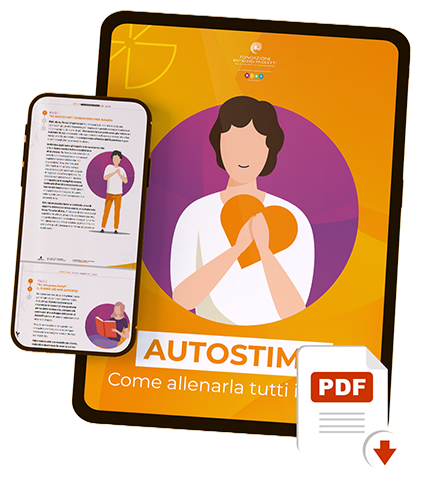
SELF-ESTEEMThe term self-esteem literally refers to the evaluation of o... More
Be part of the change. Sharing content responsibly is a gesture that stands for sustainability.
Let’s train emotional intelligenceThe first definition of Emotional Intelligence as such was p... More: what emotion does this article evoke in you?

You might be interested in


Search by category


