Accessibility Tools

Skip to main content

Psychology for the future: let’s talk about silence

The benefits of silence on attention, empathy, creativity, and time perception

The 33rd International Congress of Psychology ICP 2024: Psychology for the Future – Together in Hope was held from July 21 to 26. The new symposium, organized by the RINED Research Institute for Neuroscience, Education and Didactics of the Patrizio Paoletti Foundation, explored the fascinating topic of silence and contemplative techniques. Studies were presented on the neuropsychological mechanisms and their effects on time perception, empathy, and creativity. Various meditation techniques were examined, particularly in light of the Spherical Model of Consciousness. The event highlighted the importance of silence as a tool for global health in addressing the current challenges and opportunities of the Third Millennium.

Silence and time perception, attention, empathy, and creativity

The symposium included four contributions from neuroscientists and researchers, integrating disciplinary and methodological approaches with practices developed by Patrizio Paoletti. Among these, particular attention was given to the OVO sensory deprivation technique and the Quadrato Motor Training. The symposium was chaired by Tal Dotan Ben-Soussan, director of the RINED Research Institute of the Patrizio Paoletti Foundation, who introduced the connection between attention, body awareness, and the effect on time perception. Rotem Leshem described how verbal creativity and figurative language are influenced by exposure to an environment rich in stimuli, such as artworks or readings with innovative metaphors. Joseph Glicksohn discussed synesthesia and time perception, sharing experiences of participants immersed in an altered sensory environment through the OVO technique. Finally, Revital Naor Ziv presented a study on interoception, empathy, and perceptual components in relation to meditation.


  • GUIDED MEDITATIONS

    Three practices to train the mind

    Fill out the form
    and watch the video now

    "*" indicates required fields

    Dati Anagrafici*


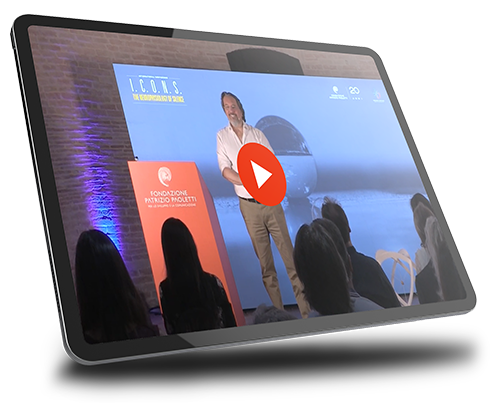
Neurophysiology of silence: I.C.O.N.S. 2024

The International Congress of Psychology fits within the scope of current scientific research, which increasingly recognizes intentional silence as a protective factor for the mind and overall physical health. Conscious silence and its related neurophysiological, psychological, and molecular aspects were also the focus of I.C.O.N.S. International Conference On The Neurophysiology Of Silence – Neurophysiological, Psychological, and Molecular Aspects of Health and Well-being, held at Sapienza University of Rome on July 3, 2024. I.C.O.N.S. brought together researchers, psychologists, and neuroscientists to share the latest studies on silence. The results of applying meditative practices in adolescence, research on mindful movement, such as Quadrato Motor Training, and the possibility of suspending automatic responses to think and act with greater awareness were presented.

Silence for global health

Neuro-psychopedagogical research recognizes and investigates how silence contributes to building health, not just as the absence of disease, but as a state of full psychophysical well-being, according to WHO guidelines. The Patrizio Paoletti Foundation is committed to scientific research that creates new and innovative solutions to respond to current changes and challenges. The focus is on continuity, collaboration, interdisciplinarity, and tangible results, integrating advanced techniques, such as brain imaging, with centuries-old traditions, like meditation.


Bibliography
  • Spani, F., Carducci, F., Piervincenzi, C., Ben-Soussan, T. D., Mallio, C. A., Quattrocchi, C. C. (2024). Assessing brain neuroplasticity: Surface morphometric analysis of cortical changes induced by Quadrato Motor Training. Journal of Anatomy.

  • Caserta, M., Ben-Soussan, T. D., Vetriani, V., Venditti, S., & Verdone, L. (2019). Influence of Quadrato Motor Training on salivary proNGF and proBDNF. Frontiers in neuroscience13, 58.

  • De Fano, A., Leshem, R., & Ben-Soussan, T. D. (2019). Creating an Internal Environment of Cognitive and Psycho-Emotional Well-Being through an External Movement-Based Environment: An Overview of Quadrato Motor Training. International journal of environmental research and public health16(12), 2160.

  • Ben‐Soussan, T. D., Glicksohn, J., De Fano, A., Mauro, F., Marson, F., Modica, M., & Pesce, C. (2019). Embodied time: Time production in advanced Quadrato and Aikido practitioners. PsyCh journal8(1), 8-16.

  • Ben-Soussan, T. D., & Glicksohn, J. (2018). Gender-dependent changes in time production following Quadrato Motor Training in dyslexic and normal readers. Frontiers in computational neuroscience, 12.

  • Lasaponara, S., Mauro, F., Carducci, F., Paoletti, P., Tombini, M., Quattrocchi, C. C., … & Ben-Soussan, T. D. (2017). Increased alpha band functional connectivity following the Quadrato Motor Training: a longitudinal study. Frontiers in human neuroscience, 11, 282.

  • Piervincenzi, C., Ben-Soussan, T. D., Mauro, F., Mallio, C. A., Errante, Y., Quattrocchi, C. C., & Carducci, F. (2017). White Matter Microstructural Changes Following Quadrato Motor Training: A Longitudinal Study. Frontiers in human neuroscience, 11, 590.

  • Lasaponara, S., Mauro, F., Ben-Soussan, T. D., Carducci, F., Tombini, M., Quattrocchi, C. C., Errante, Y., Mallio, C. A., Paoletti, P. (2016). Electrophysiological indexes of eyes open and closed resting states conditions following the Quadrato Motor Training. International Journal of Bioelectromagnetism, 18(2), 99-108.

  • Ben-Soussan, T. D., Glicksohn, J., & Berkovich-Ohana, A. (2015). From cerebellar activation and connectivity to cognition: a review of the Quadrato Motor Training. BioMed research international, 2015.

  • Ben-Soussan, T. D., Berkovich-Ohana, A., Piervincenzi, C., Glicksohn, J., & Carducci, F. (2015). Embodied cognitive flexibility and neuroplasticity following Quadrato Motor Training. Frontiers in psychology, 6, 1021.

  • Ben‐Soussan, T. D., Piervincenzi, C., Venditti, S., Verdone, L., Caserta, M., & Carducci, F. (2015). Increased cerebellar volume and BDNF level following quadrato motor training. Synapse, 69(1), 1-6.

  • Venditti, S., Verdone, L., Pesce, C., Tocci, N., Caserta, M., & Ben-Soussan, T. D. (2015). Creating well-being: increased creativity and proNGF decrease following Quadrato Motor Training. BioMed research international, 2015.

  • Ben-Soussan, T. D., Avirame, K., Glicksohn, J., Goldstein, A., Harpaz, Y., & Ben-Shachar, M. (2014). Changes in cerebellar activity and inter-hemispheric coherence accompany improved reading performance following Quadrato Motor Training. Frontiers in systems neuroscience, 8, 81.

  • Ben-Soussan, T. D., Berkovich-Ohana, A., Glicksohn, J., & Goldstein, A. (2014). A suspended act: increased reflectivity and gender-dependent electrophysiological change following Quadrato Motor Training. Frontiers in psychology, 5, 55.

  • Ben-Soussan, T. D., Glicksohn, J., Goldstein, A., Berkovich-Ohana, A., & Donchin, O. (2013). Into the square and out of the box: the effects of Quadrato Motor Training on creativity and alpha coherence. PloS one, 8(1), e55023.

  • Ben-Soussan, T. D., Glicksohn, J., Ohana, A. B., Donchin, O., & Goldstein, A. (2011). Step in time: changes in EEG coherence during a time estimation task following Quadrato Motor Training. Proceedings of Fechner Day, 27(1), 239-244.

Images

Be part of the change. Responsibly sharing content is an act of sustainability.

Let's train emotional intelligence: what emotion does this article arouse in you?

You might be interested in

    Subscribe to the newsletter