

Post-Traumatic Stress Disorder: When the Event Happens but Never Ends
Post-Traumatic StressFrom a clinical point of view, stress is a physiological and... More Disorder (PTSD) is a complex psychological condition that can develop after exposure to intense traumatic events, such as serious accidents, abuse, wars, natural disasters, or violent experiences.
Unlike a normal stress reaction, PTSD presents with persistent and disabling symptoms that significantly impair a person’s psychological, relational, and occupational well-being. According to the World Health Organization, approximately 3.6% of the global population is affected by this condition each year, with higher incidence among those who have experienced direct traumatic events.
Symptoms may emerge weeks, months, or even years after the trauma and include intrusive re-experiencing, avoidance, hyperarousal, and mood alterations. Modern science has shown that PTSD is not simply an “emotional weakness” but a genuine neurobiological dysfunction with observable correlates in the brain. Understanding this disorder is crucial not only for those affected but also for society, which can then provide appropriate support, empathyEmpathy is a fundamental skill that allows us to connect wit... More, and tools for prevention and care.
What Are the Main Symptoms of Post-Traumatic Stress Disorder?
PTSD manifests through a set of distinctive symptoms recognized by major diagnostic manuals such as the DSM-5 and ICD-11. For a diagnosis of PTSD, these symptoms must last more than a month and cause clinically significant distress.
The four main symptom clusters are:
- Intrusive re-experiencing of the trauma: the individual experiences flashbacks, recurrent nightmares, or intrusive thoughts that bring the traumatic event to life as if it were happening again. These episodes are not mere memories but full sensory and bodily reactivations, with strong emotional and physiological responses.
- Avoidance of trauma-related stimuli: people with PTSD tend to avoid places, people, situations, or thoughts that may remind them of the traumatic event. This avoidance can severely limit social, work, and personal life, contributing to isolation.
- Negative alterations in cognition and mood: distorted beliefs about oneself or the world (“it’s my fault,” “no one can be trusted”), feelings of guilt or shame, loss of interest in daily activities, and difficulty experiencing positive emotions.
- Hyperarousal: manifests as irritability, sleep difficulties, hypervigilance, exaggerated reactions to stimuli, and trouble concentrating. The body and mind remain in a chronic state of alert, as if danger were still present.
This combination of symptoms can make PTSD extremely debilitating, with serious impacts on quality of life. Understanding the symptoms is the first step toward early diagnosis and effective treatment.
What Happens in the Brain of Someone with PTSD?
Post-traumatic stress disorder has well-documented neurobiological bases. NeuroscienceThe human brain is one of the most complex and fascinating s... More has identified structural and functional changes in several brain areas, explaining many of the disorder’s manifestations. Key alterations include:
- HippocampusThe hippocampus is a part of the brain located in the inner ... More: involved in memoryMemory is a fundamental cognitive function that consists in ... More and temporal orientation, the hippocampus shows reduced volume in individuals with PTSD. This alteration impairs the ability to distinguish past from present, facilitating re-experiencing and flashbacks.
- Amygdala"The amygdala is a gray matter structure named after its cha... More: the brain’s “alarm center,” responsible for the fear response. In PTSD patients, the amygdala is hyperactive, causing exaggerated responses to emotional stimuli and a constant sense of perceived threat.
- Prefrontal cortexThe prefrontal cortex plays a fundamental role in numerous p... More: regulates amygdala activity and rational thinking. In PTSD, its activity is reduced, making it harder to control emotions and accurately assess danger.
- Hypothalamic-pituitary-adrenal (HPA) axis: regulates the stress response through cortisolThe adrenal glands, small pyramid-shaped glands above the ki... More release. In PTSD patients, the HPA axis can become dysfunctional, contributing to hormonal imbalance and chronic stress responses.
These neurophysiological mechanisms confirm that PTSD is a real, measurable disorder, not merely psychological. New neuroimagingNeuroimaging is a scientific discipline of great importance ... More techniques, such as functional MRI (fMRI), provide further evidence of the link between trauma and brain changes.
Who Is Most Vulnerable to Developing PTSD?
Not everyone exposed to trauma develops PTSD. Individual, social, and environmental vulnerability factors increase risk. Key factors include:
- Intensity and duration of the traumatic event: prolonged or repeated events (such as domestic violence or childhood abuse) are more likely to leave lasting psychological effects compared to isolated events.
- Age at the time of trauma: childhood and adolescenceAdolescence refers to the transitional period from childhood... More are particularly sensitive periods. Traumas experienced during these stages can profoundly alter brain development and emotional skills.
- Lack of social support: absence of a supportive network or reference figures after trauma is a key factor in developing PTSD. Emotional support, conversely, can be a strong protective factor.
- Personal history of mental disorders: previous experiences of depressionDepression is a disorder characterized by persistent sadness... More, anxietyAnxiety is an emotional response characterized by feelings o... More, or other disorders can increase vulnerability, especially with genetic predisposition.
- Previous traumatic experiences: multiple traumas over a lifetime, or working in high-exposure environments (healthcare workers, firefighters, military personnel), can raise the likelihood of post-traumatic symptoms.
This heterogeneity makes careful assessment of risk factors essential to identify personalized prevention and intervention pathways.
How Is PTSD Treated?
In recent decades, psychotherapy has made great advances in treating PTSD, integrating scientifically validated approaches. Main therapeutic interventions include:
- Trauma-focused cognitive-behavioral therapy (TF-CBT): helps patients restructure dysfunctional thoughts related to the trauma and gradually confront traumatic memories in a safe context.
- EMDR (Eye Movement Desensitization and Reprocessing): involves bilateral stimulation (often eye movements) while the patient recalls the traumatic event. The goal is to promote adaptive memory processing and reduce emotional impact.
- Pharmacological therapies: in some cases, antidepressants (especially SSRIs like sertraline or paroxetine) are used to alleviate symptoms, particularly when depressive or anxious comorbidities are present.
- Group therapies and integrated approaches: sharing with other survivors can foster connectionConnection: the human need that precedes all technology Conn... More, reduce shame, and strengthen identity. Techniques like mindfulness and somatic therapy are also showing promising results.
PTSD treatment must be flexible, gradual, and safety-oriented. It is essential that it occurs in an empathetic and competent therapeutic environment, where the individual feels welcomed and protected.
What Are the Social Impacts of PTSD on Daily Life?
Post-traumatic stress disorder affects not only the individual clinically but also has profound social, relational, and occupational consequences. Its effects appear in various areas of daily life:
- Interpersonal relationship difficulties: individuals may become distant, irritable, or overly distrustful. Emotional bonds often strain, making it hard to maintain stable, fulfilling relationships.
- Work impairment: constant anxiety, flashbacks, and mental fatigueFatigue is a common experience that can manifest in many for... More reduce productivity and increase absenteeism or job loss risk. In some cases, PTSD can lead to work disability.
- Risk of social isolationSocial isolation is a psychological and social phenomenon th... More: to avoid trauma-related situations, many people stop going out, attending events, or seeing friends. This isolation can worsen depressive symptoms and reinforce loneliness.
- StigmaStigma towards mental health can be defined as prejudice and... More and misunderstanding: people with PTSD often encounter a lack of public awareness. The risk is being judged as “weak” or “exaggerating,” increasing guilt and shame.
- Impact on future generations: unprocessed trauma can be transmitted within families, even through epigenetic mechanisms, affecting children’s behavior and creating dynamics of insecurity, anxiety, or overprotection.
For these reasons, promoting a more informed mental healthAccording to the World Health Organization, mental health ca... More culture is essential, recognizing PTSD as a serious condition deserving care without blame.
The biannual magazine on lifestyles and inner resources, emotions, relationships, and intelligences, for overall well-being
"*" indicates required fields
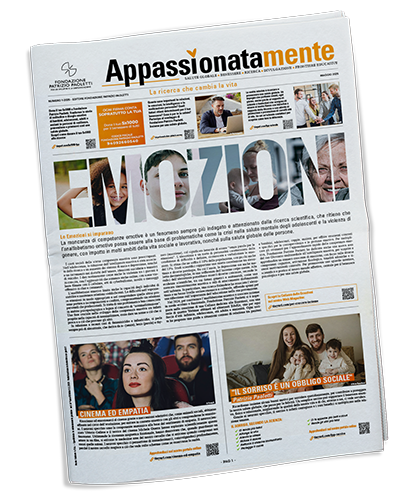
READ WITH PASSION
Be part of the change. Sharing content responsibly is a gesture that stands for sustainability.
Let’s train emotional intelligenceThe first definition of Emotional Intelligence as such was p... More: what emotion does this article evoke in you?

You might be interested in


Search by category


