

What is meant by an educating environment?
The educating environment is a concept referring to the physical, social, and cultural setting in which learningThe term learning—with the synonyms to learn, assimilate, ... More and education take place. It is a context intentionally created and organized to promote meaningful learning, social interaction, and the overall development of individuals. The educating environment goes beyond the physical classroom space and extends to all influences that contribute to the educational experience.Pedagogical contributions
The educating environment has been extensively studied by various scholars and experts in the field of education. Among them, one of the most significant contributions was made by Lev Vygotsky (1896-1934), a Russian psychologist and educator, who highlighted the importance of social interaction and cultural context in individual learning. According to Vygotsky, learning occurs through social mediation and interaction with other members of the community.Jean Piaget (1896-1980), a Swiss psychologist, emphasized the importance of play and exploration within the educating environment. According to Piaget, children construct their knowledge through interaction with the surrounding world and through active exploration.
Another notable figure is Maria Montessori (1870-1952), an Italian educator, who developed an educational approach based on self-education and the independence of children. According to Montessori, the educating environment should be prepared to promote autonomy, self-discipline, and guided exploration.
Howard Gardner (1943-), an American psychologist, contributed to the concept of the educating environment through the theory of multiple intelligences. According to Gardner, the educating environment should provide opportunities for the development of different forms of intelligence, recognizing and valuing the diverse abilities and talents of individuals.
The theories of these scholars and others have influenced the conception and design of the educating environment. From the perspective of physical space, the educating environment can be designed to encourage interaction, collaboration, and exploration. This may include the arrangement of furniture and teaching tools, the use of flexible work areas, spaces for dialogueDialogue: When Words Become Relationship Dialogue is one of ... More and reflection, as well as the integration of educational technologies.
The contribution of Pedagogy for the Third Millennium
According to the pedagogical method developed by Patrizio Paoletti and his team, a properly designed educating environment is crucial for learning ways of interaction and exchange with contexts that allow learning always, in any way, from everything. In this perspective, as Paoletti states in “Crescere nell’eccellenza”: The child immersed in a proper educational context perceives within themselves the drive that leads to the discovery of the forces that inhabit them. They must learn to interact with them, resist and surrender to keep their boat on the right course like a helmsman. They discover within themselves that the movement toward the environment is not cold but dynamic, like a penetrating love, a vital index, comparable to hunger. One who is hungry feels within themselves the urge to relate and seeks feeling. It is this drive that originates the child’s interest in the environment, propelling them into incessant activity. This activity is the continuous fire, comparable to the permanent combustion of the elements that make up the world, which in contact with oxygen causes the mild and natural temperature of our environment.”Educational resources
Educational resources are a fundamental element of the educating environment. This includes teaching materials, books, digital tools, access to up-to-date information, and other relevant resources that support student learning. A wide range of resources provides opportunities for exploration, deepening, and application of knowledge.Social interactions play a crucial role in the educating environment. An environment where students are encouraged to collaborate, actively participate in discussions, and express their ideas fosters social learning and the acquisition of relational skills. Inclusion, diversity, and mutual respect are key values that must be promoted in the educating environment.
Pedagogical practices
The pedagogical practices adopted in the educating environment directly influence student learning. Innovative teaching methods, such as problem-based learning, cooperative learning, and the use of digital technologies, can stimulate students’ interest, curiosity, and engagement.The culture of education
Moreover, the educational culture of the institution plays a decisive role in the educating environment. A culture that values continuous learning, innovation, attention to student needs, and collaboration among educators creates an environment in which all participants are engaged and motivated to achieve meaningful outcomes.The goal of the educating environment is to create a context that promotes the overall development of individuals, stimulating curiosity, creativity, and cognitive, social, and emotional skills. Through a well-designed educating environment, students can develop their potential, acquire knowledge and skills, and become aware and active citizens in society.
Download the EduKit to mindfully manage your relationship with young people
"*" indicates required fields
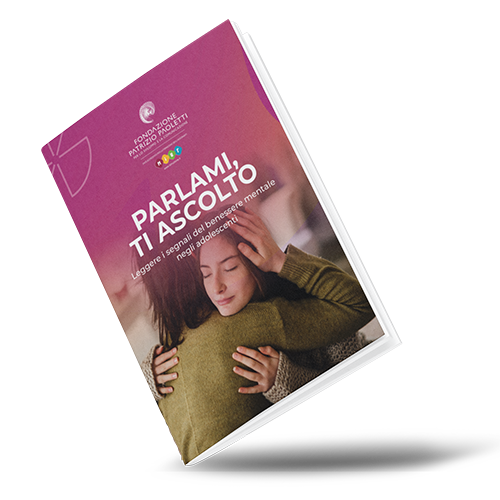
TALK TO ME, I’M LISTENING
Be part of the change. Sharing content responsibly is a gesture that stands for sustainability.
Let’s train emotional intelligenceThe first definition of Emotional Intelligence as such was p... More: what emotion does this article evoke in you?

You might be interested in


Search by category


