“I am you, you are me, may everything be for our neighbor.”
Friendship and community according to Pedagogy for the Third Millennium
Neuroscientific and psychopedagogical research has investigated friendshipEven though rudimentary forms of friendship are present in v... More in recent years as a fundamental expression of human relationships, uncovering its enormous benefits: it is a highly protective factor for psychological well-being during adolescenceAdolescence refers to the transitional period from childhood... More, aids in the positive processing of physical effort, improves group performance, enhances the capacity to enjoy pleasant sensations, and even increases life expectancy.
Friendship in Pedagogy for the Third MillenniumPedagogy for the Third Millennium (PTM) is an interdisciplin... More
In PedagogyTo understand what pedagogy is, let’s provide a definition... More for the Third Millennium, an educational method designed by Patrizio Paoletti and his team, friendship is one of the eight areas of life, defined in pairs: Body-Spirit, Family-Affection, Work-Finances, Friendship-Community. Human beings fully develop their potential when they can express themselves with equal intensity in each area, and for each pair, one term represents the personal dimension while the other represents growth toward a broader measure.
From this perspective, friendship represents the foundational core of the expanded relationship that is the community. Friendship is the relational treasure chest of early learningThe term learning—with the synonyms to learn, assimilate, ... More and the most intimate values. For this reason, friendships, especially lifelong ones, are an extremely valuable protective factor for resilienceAccording to the American Psychological Association, resilie... More, as they are relationships that allow us to reconnect with our intrinsic motivations amid life’s ups and downs.
The challenges of the web…
The dynamics of friendship have been profoundly influenced by the rise of social networks, which, as their name suggests, were created to support this type of relationship. Consider that Facebook – still the most widely used social network in the world with over 3 billion users – was founded with the payoff: “to stay in touch with the people in your life.”
Social networks themselves are certainly neutral tools and do not necessarily harm direct contact, but they also present significant pitfalls. According to research by Wilcox and Stephen, virtual contacts lead to a short-term boost in self-esteemThe term self-esteem literally refers to the evaluation of o... More, while frequent social media use has been shown to reduce self-control, as evidenced by worsened eating habits and less commitment to facing challenges. The researchers even found correlations between the number of Facebook contacts, debt, and obesity.
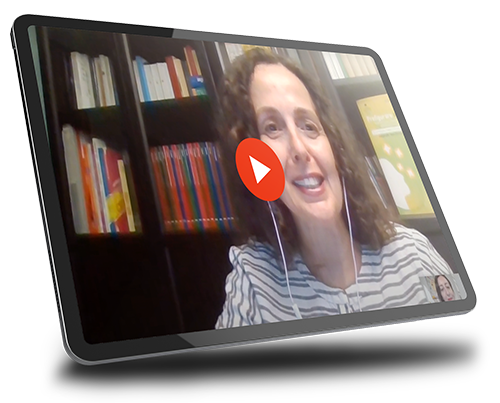
FRIENDS ONLINE
A video lesson to understand the paradox of digital loneliness among teenagers and guide them towards authentic relationships, both online and offline.
"*" indicates required fields
…and Artificial IntelligenceArtificial Intelligence (AI) is a rapidly growing field of s... More
An additional challenge comes from virtual friendships in the literal sense, i.e., digital friends powered by AI. Some apps, like Replika, a virtual friend, are spreading rapidly with unexpected results. The Facebook group “Replika Friends” has 36,000 members, while the group for people in romantic relationships with their Replika has 6,000 members. The active Replika subreddit has nearly 58,000 members. The app has 10 million downloads on Android and ranks in the top 50 of Apple’s health and fitness apps. It is a machine learning technology that adapts to users’ responses to increasingly match their preferences and build intimacy. Unexpectedly, in recent months, several users reported being verbally sexually harassed by their app.
Friendship, diversity, and social stereotypes
A major risk of these technologies is their ease of adapting to users’ needs. Friendships, especially in childhood and adolescence, are traditionally tied to the environments in which they form, and therefore are somewhat less selective. Lifelong friends are often those we met in school or at sports clubs. While chemistry and genetics may play a role, circumstances have led us to develop bonds with people who are very different from us.
This aspect is crucial because it fosters openness to the broader social world. If my friendships are varied and diverse, I am more likely to recognize friends in new and different people I encounter. This learning is encoded in the mirror neuronsMirror neurons represent one of the most important discoveri... More of my brain: through them, I recognize myself in the actions of others and can educate myself to do so increasingly broadly, developing the extraordinary capacity called compassionCompassion is a positive emotion that arises when we not onl... More. Developing openness to the world is what connects one pole of the eight life areas to the other: from Friendship to Community.
From Friendship to Community: the benefits of volunteeringVolunteering is an activity of help and service carried out ... More for mental healthAccording to the World Health Organization, mental health ca... More
From this perspective, volunteering is often a way to “make friends with society.” According to a 2020 study published in the Journal of HappinessHappiness represents an emotional state characterized by pos... More Studies, which analyzed data from nearly 70,000 participants, those who volunteered in the previous year reported greater life satisfaction and better overall health compared to those who did not volunteer. Researchers also found that more frequent volunteers experienced greater benefits: those who volunteered at least once a month reported better mental health than those who volunteered little or not at all.
Caravan of the Heart
In the Caravan of the Heart, Fondazione Patrizio Paoletti’s major face-to-face awareness campaign, volunteers experience these benefits directly. Equipped with orange t-shirts and “Live Passionately” bracelets, they meet thousands of people each year on beaches to raise awareness about the importance of education and social engagement. In this way, volunteers become friends to entire beaches of bathers, discovering the richness of diversity among people united by the desire to do good for others, in which the volunteers themselves recognize themselves. The encounter between volunteers walking the beaches and donors seems to embody the ancient saying: “I am yours, you are mine, may everything be for our neighbor.”
- Bagwell, C. L., & Bukowski, W. M. (2018). Friendship in childhood and adolescence: Features, effects, and processes.
- Chung, S., Lount Jr, R. B., Park, H. M., & Park, E. S. (2018). Friends with performance benefits: A meta-analysis on the relationship between friendship and group performance. Personality and Social Psychology Bulletin, 44(1), 63-79.
- Holt-Lunstad, J., Smith, T. B., & Layton, J. B. (2010). Social relationships and mortality risk: a meta-analytic review. PLoS medicine, 7(7), e1000316.
- Lawton, R. N., Gramatki, I., Watt, W., & Fujiwara, D. (2021). Does volunteering make us happier, or are happier people more likely to volunteer? Addressing the problem of reverse causality when estimating the wellbeing impacts of volunteering. Journal of Happiness Studies, 22(2), 599-624.
- Paoletti, P, & Selvaggio, A., (2011). Mediazione – Quaderni di Pedagogia per il Terzo Millennio. Edizioni 3P.
- Paoletti, P., (2008). Crescere nell’eccellenza. Armando Editore.
- Schnall, S., Harber, K. D., Stefanucci, J. K., & Proffitt, D. R. (2008). Social support and the perception of geographical slant. Journal of Experimental Social Psychology, 44(5), 1246-1255.
- Vitaro, F., Boivin, M., & Bukowski, W. M. (2009). The role of friendship in child and adolescent psychosocial development.
- Wagner, U., Galli, L., Schott, B. H., Wold, A., van der Schalk, J., Manstead, A. S., ... & Walter, H. (2015). Beautiful friendship: Social sharing of emotions improves subjective feelings and activates the neural reward circuitry. Social Cognitive and Affective NeuroscienceThe human brain is one of the most complex and fascinating s... More, 10(6), 801-808.
- Wilcox, K. & Stephen, A. T., (2012). Are Close Friends the Enemy? Online Social Networks, Self-Esteem, and Self-Control, in «Journal of Consumer Research».
Be part of the change. Responsibly sharing content is an act of sustainability.
Let's train emotional intelligenceThe first definition of Emotional Intelligence as such was p... More: what emotion does this article arouse in you?